Painting guides / Photo guide
Photographing black and white fur for a pet portrait
Black fur has colour in its reflections. White fur has colour in its shadows. Those small changes are what give a flat canvas the shape of a cheek or the bridge of a nose.
Move away from the brightest background
A dark dog in front of a sunny window can turn into a silhouette. Turn the scene around so the window light falls across the face. Watch for a catchlight in the eye and a lighter edge along the ears. For a white cat, step back from direct sun so the camera keeps detail on the forehead.
Use a different tone behind the head
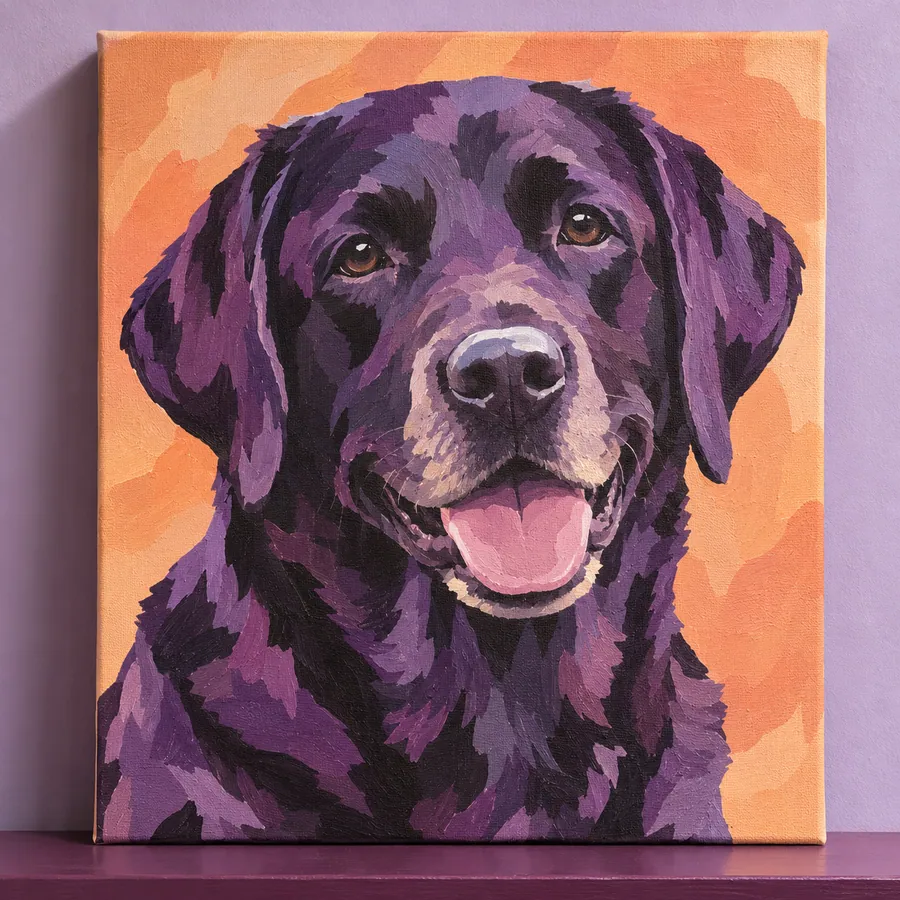
A black Labrador on a charcoal sofa can be hard to separate from the cushions. Try a mid-tone wall or throw, then leave a little space behind your pet. The same principle helps a white muzzle stand out against a pale wall. Pick a quiet background that lets the outline read clearly.
Check the markings at a smaller size
Shrink the image on screen. Can you still see where the white blaze ends or where the eyebrow sits? Smaller shapes often merge when a photo becomes a numbered pattern. If a particular marking is essential to the likeness, pick a closer or more evenly lit photograph.
Keep a natural version
Strong filters can obscure the difference between a shadow and a patch of fur. Compare a filtered picture with the camera original. Choose the one where the expression, markings and edge of the nose are easiest to see. Our gallery has studio examples of both a black Labrador and a tuxedo cat.